
Pharma Details

March 2026
Volume 12 - Issue 01
AWaRe classification of antibiotics, a tool to complement antibiotic stewardship policy
Antimicrobial resistance is a global threat and has been recognized as one of the top three major public health challenges by the World Health Organization (WHO).
Recent national data from Oman, for instance, have shown an increasing prevalence of multidrug-resistant Gram-negative bacteria such as Acinetobacter spp. (MDRA) and carbapenamase-producing Enterobacterales (CRE), as well as methicillin-resistant Staphylococcus aureus (MRSA). Additionally, enteric pathogens such as Salmonella, resistant fungal pathogens such asCandida auris, and multidrug-resistant tuberculosis (MDR-TB) are of growing concern.
In response to this issue, the Sultanate of Oman has strengthened its efforts to combat antimicrobial resistance by implementing the Antimicrobial Stewardship (AMS) program and publishing a national policy on January 1, 2025.
This policy provides a comprehensive framework to support healthcare professionals and stakeholders in optimizing antimicrobial use, and preserving their effectiveness for future generations. It emphasizes evidence-based practices, enhanced infection prevention and control, and strengthening surveillance systems.
A key component of the national AMS program is the adoption of the AWaRe classification of antibiotics. This classification serves as an essential tool for monitoring antibiotic consumption, optimizing prescribing practices, and supporting national-level antibiotic stewardship efforts.
The AWaRe classification was developed by the World Health Organization (WHO) in 2017. It categorizes antibiotics into three groups, Access, Watch, and Reserve, based on their spectrum of activity and potential to develop resistance:
Access group
- Includes first-line antibiotics for the most common and serious infections.
- These antibiotics should be widely available, affordable, and of good quality.
Watch group
- Includes antibiotics with a higher resistance potential.
- Their use should be limited and carefully monitored. Should be prescribed sparingly to avoid resistance.
Reserve group
- Includes last-resort antibiotics for the treatment of multidrug-resistant infections.
- Their use should be reserved for specific cases to preserve their efficacy.
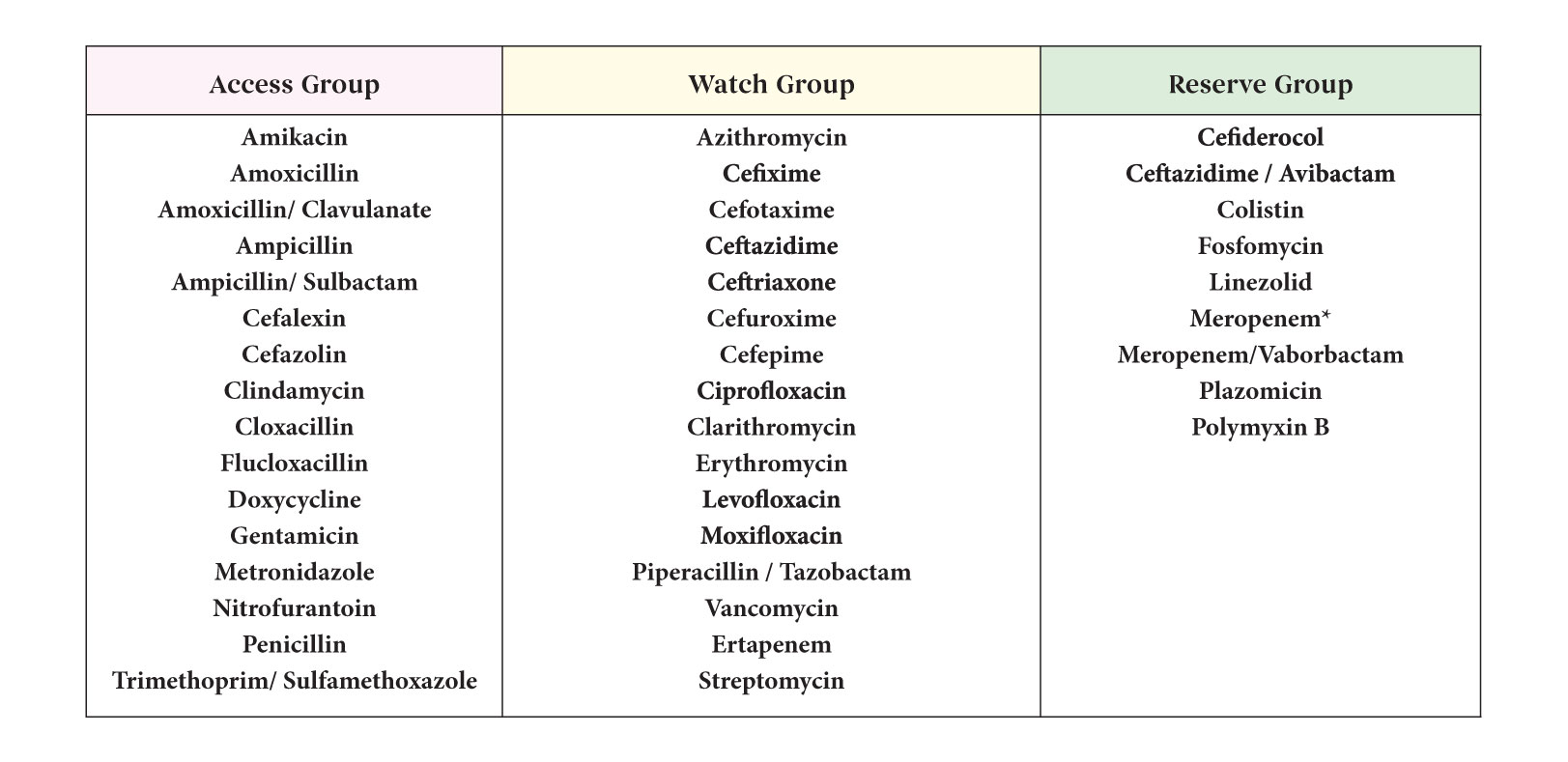 |
Table 1: Classification of antibiotics into Access, Watch, and Reserve groups as per the WHO AWaRe framework. |