
Pharma Details

March 2026
Volume 12 - Issue 01
FDA initiates removal of ‘black box’ warnings from menopausal hormone replacement therapy products
Menopausal hormone therapies, also commonly referred to as hormone replacement therapy (HRT), are approved to provide relief from common menopause symptoms, such as hot flashes and night sweats, and symptoms due to changes to the vagina, vulva, and urinary tract caused by decreased estrogen.
In November 2025, the FDA announced plans to remove its long-standing ‘black box’ warnings from HRT products, because of which women may be under-utilizing many approved therapies that can alleviate menopause symptoms and improve health.
The FDA is initiating removal of the boxed warnings following a comprehensive review of the scientific literature, an expert panel in July, and a public comment period.
The agency is working with companies to update language in product labeling to remove references to risks of cardiovascular disease, breast cancer, and probable dementia. However, it is not seeking to remove the boxed warning for endometrial cancer for systemic estrogen-alone products.
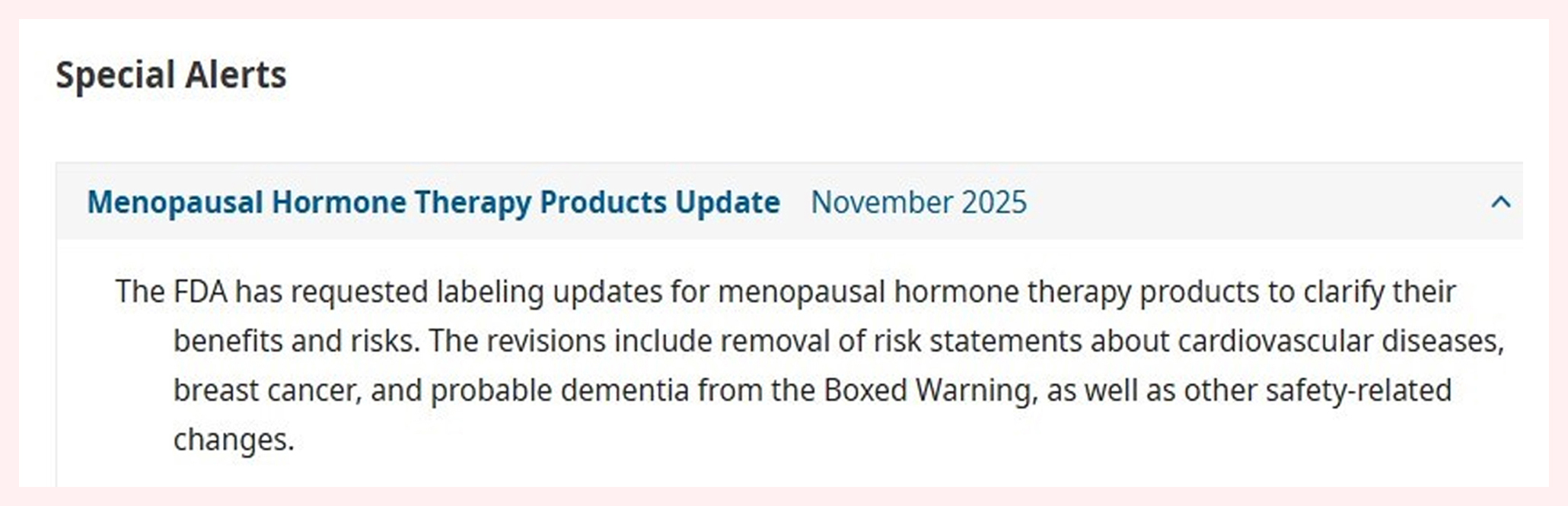 |
Figure 1: Special alert. Hormone therapy/UpToDate reference. |
Supportive evidence
Studies have provided evidence that starting HRT within ten years of the onset of menopause can have numerous benefits that for most women, outweigh potential risks. Benefits include a reduced risk of all-cause mortality and fractures. 50% reduction in heart attack risk, 64% reduction in cognitive decline, and 35% lower risk of Alzheimer’s.
In addition, an analysis of 30 trials with 26,708 women participants found HRT was not associated with increased cancer mortality. In fact, women who start HRT before age 60 appear to have a decreased mortality risk.
Key information
The removal of a warning label, however, does not imply that HRT is suitable for every woman or that it should be broadly prescribed without careful evaluation.
Treatment must remain individualized, considering age, symptom severity, personal and family risk profile, comorbidities, and patient preference.
References
- 1 FDA news release, November 10, 2025. < https://www.fda.gov/news-events/press-announcements/hhs-advances-womens-health-removes-misleading-fda-warnings-hormone-replacement-therapy>